TAMARA'S NOTEBOOK · PERSONAL INTERESTS
Away from the Dissertation Desk: Learning Chess in My Spare Time
Most of this blog is about dissertation writing, but learning does not have to stop when the academic work is put away. In my spare time, I enjoy learning chess: a different subject to explore, one move and one idea at a time.
A spare-time interest and a gentle invitation to explore something new.
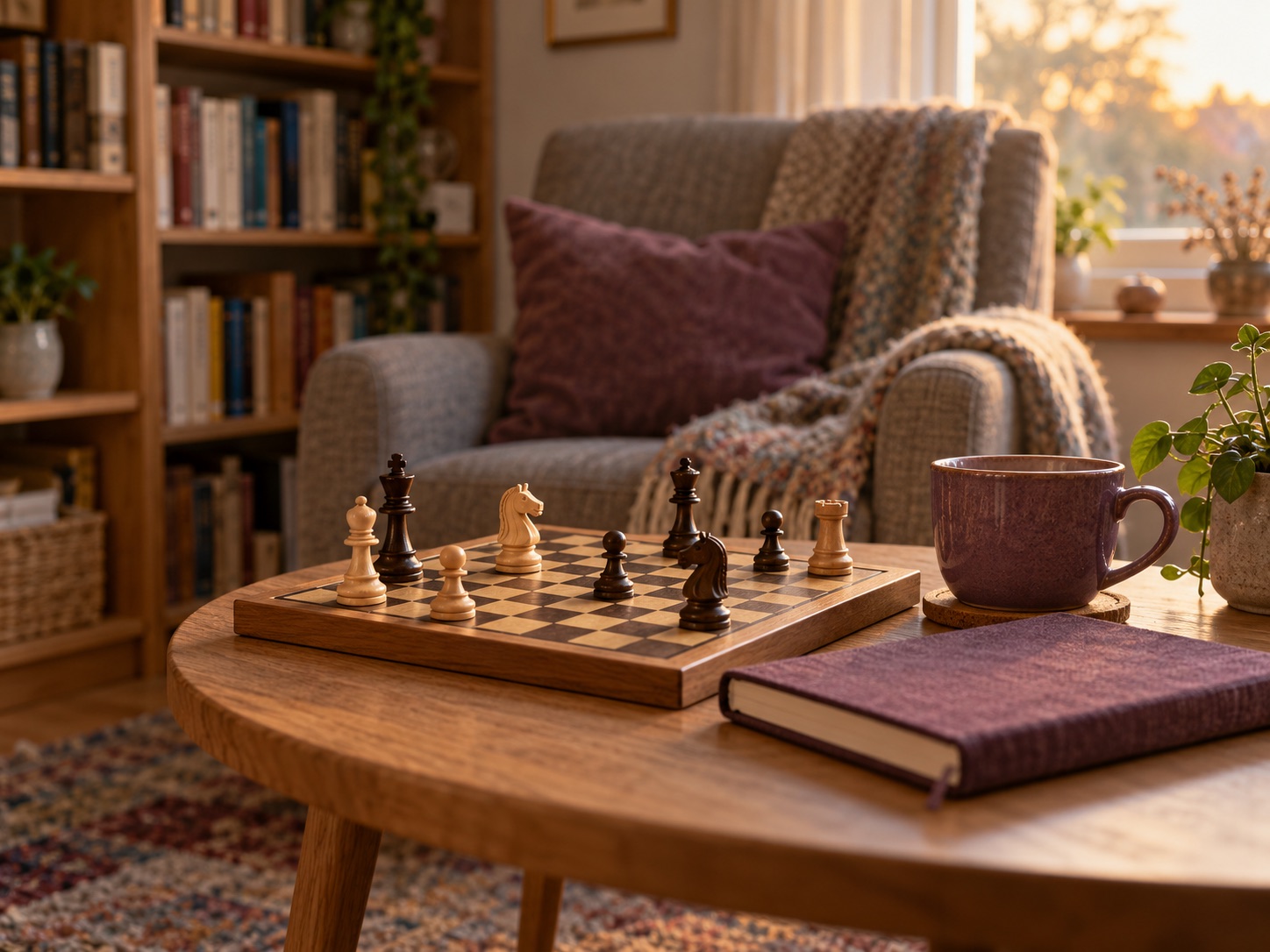
One new idea is a worthwhile starting point
A hobby can be approached with curiosity rather than a deadline. Start small, explore an explanation and let enjoyment guide what you try next.
A different subject to be curious about
Chess has an appealing starting point: a board, a set of pieces and a position to think about. It can also seem daunting when unfamiliar opening names and long move sequences appear. That is a familiar feeling for anyone approaching a new subject, even when the subject is a hobby rather than a dissertation.
The useful response is to make the first task smaller. There is no need to understand every opening before exploring one. Choose a starting point, ask what the moves are trying to achieve and leave room for questions. Being a beginner is part of the interest, rather than a stage that needs to be hidden.
A hobby can have its own pace. It need not become another project with a deadline, a performance target and a complicated tracking system. Curiosity is a perfectly good reason to sit down and learn something.
Finding an accessible place to begin
For readers wondering where to learn chess openings for free, Chess Openings Mastery is one place to explore. The site presents its trainer as free with no signup and lets visitors choose an opening, play through a line and receive feedback. Progress is saved locally in the browser.
Its written lessons provide another route into the subject alongside the practice board. That combination offers a simple way to try the material: read an explanation, attempt a short sequence and revisit the point that was unclear. It is a resource to investigate, rather than a claim that everyone learns in the same way.
Keep the browser-local progress arrangement in mind if you move between devices. The site also includes disclosed affiliate links to separate Chess.com offers; those external memberships are distinct from trying the free trainer.
Ask what the move is doing
The site's opening-study guide makes a useful distinction between recalling moves and understanding ideas. A sequence is easier to discuss when each move has a purpose. If the position changes, an explanation gives you something to consider beyond simply trying to remember what came next.
There is a loose parallel with the kind of reading discussed on this blog. Copying a sentence into notes and explaining its contribution to an argument are different tasks. With chess, the comparable question is what a move contributes to the position. The subjects are different, but both invite an explanation in your own words.
That does not mean every moment of a hobby needs analysis. Sometimes it is enough to notice one idea that was previously unfamiliar. A small piece of understanding can be a satisfying stopping point for a session.
Keep the next session manageable
A gentle routine to try is to choose one opening explanation and one short practice line. Before moving on, name the idea you want to remember. On another day, return to it and see what still makes sense. This is a suggested approach, not a description of a fixed training schedule or a promise about improvement.
A brief note can help you find your starting point again: the opening's name, the part that raised a question and a link to the explanation. Keep it short enough that making the note does not become the main activity. The purpose is to make returning easier.
If the format stops being enjoyable, change the activity. Reading about an opening, replaying an example and playing a game offer different experiences. There is room to explore which one suits the time and attention available.
Leave room for mistakes and unexpected replies
A practice exercise and a game ask different things of a learner. A line drill can check whether a particular sequence has been recalled, while an opponent may choose another response. The opening-study guide notes that an alternative to the expected trainer move is not automatically bad chess; the exercise is checking a selected line.
That distinction encourages useful questions. Was the difficulty remembering the sequence, understanding the position or noticing what changed? Those questions are more specific than treating every error as evidence that the whole subject is too difficult.
The same patience is helpful whenever something is unfamiliar. A first attempt gives you information about what to revisit. There is no need to turn a missed move into a verdict on your ability to learn.
Let the hobby remain a hobby
An interest outside writing and study can simply be enjoyable in its own right. Learning chess does not need a claim that it will raise an essay mark, increase intelligence or make every decision better. This article is about an interest, not evidence for those outcomes.
For anyone balancing a demanding project with other parts of life, the invitation is modest: find something you are curious about and give yourself permission to approach it as a learner. You do not need to be accomplished at a hobby before it is worth your time.
The dissertation guides will still be here when the next writing session begins. Away from that desk, there is also room for a chessboard, an unfamiliar opening and the simple pleasure of working out a little more than you knew before.
Resource notes
Published 27 October 2026. Resource features checked against the Chess Openings Mastery homepage and its opening-study guide. The suggested routine is general guidance, not a tested training programme or a claim about academic results. External affiliate membership offers are separate from the free trainer.
Image created for this article with AI. It is an illustrative still life, not a portrait, a photograph of Tamara's surroundings or an instructional chess position.